
ESA Hera Mission Update: Didymos Asteroid Crater Findings
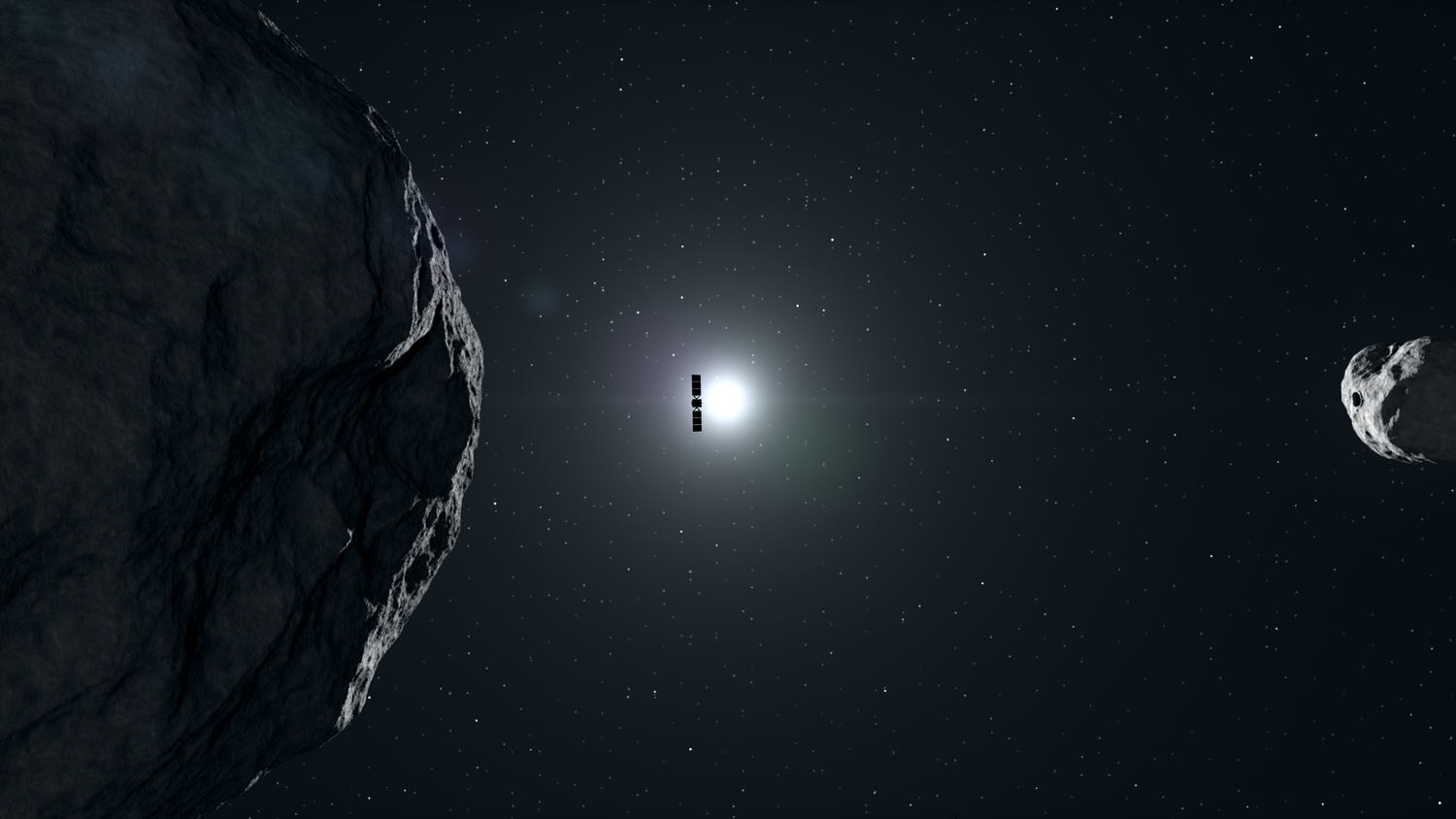
Humans have already successfully knocked a moon out of its original orbit in deep space? While NASA's DART spacecraft hit the asteroid Dimorphos in 2022, we still do not know exactly what the impact site looks like. The European Space Agency is now sending the Hera mission to find out if we left a small dent or if we completely reshaped the entire space rock.
You might wonder why we need to go back - From Earth, telescopes can see that Dimorphos is moving differently but they cannot show us the actual crater. Hera acts like a detective that visits the scene of the accident to take close up photos and measurements - this mission is the first time we will see the results of a kinetic impact on a small body in our solar system.
The Goal of the Hera Mission
Hera is traveling to the binary asteroid system of Didymos and its smaller moon, Dimorphos. The primary objective is to perform a detailed survey of where the DART collision happened. By getting close, the spacecraft can see things that are impossible to detect from millions of kilometers away.
Scientists want to confirm the physical changes caused by the impact. You will see that the mission uses two smaller "CubeSats" to fly even closer to the surface - these small tools help Hera map the asteroid in high resolution - this data is vital if we ever need to protect Earth from a similar rock in the future.
Measuring the Impact Site
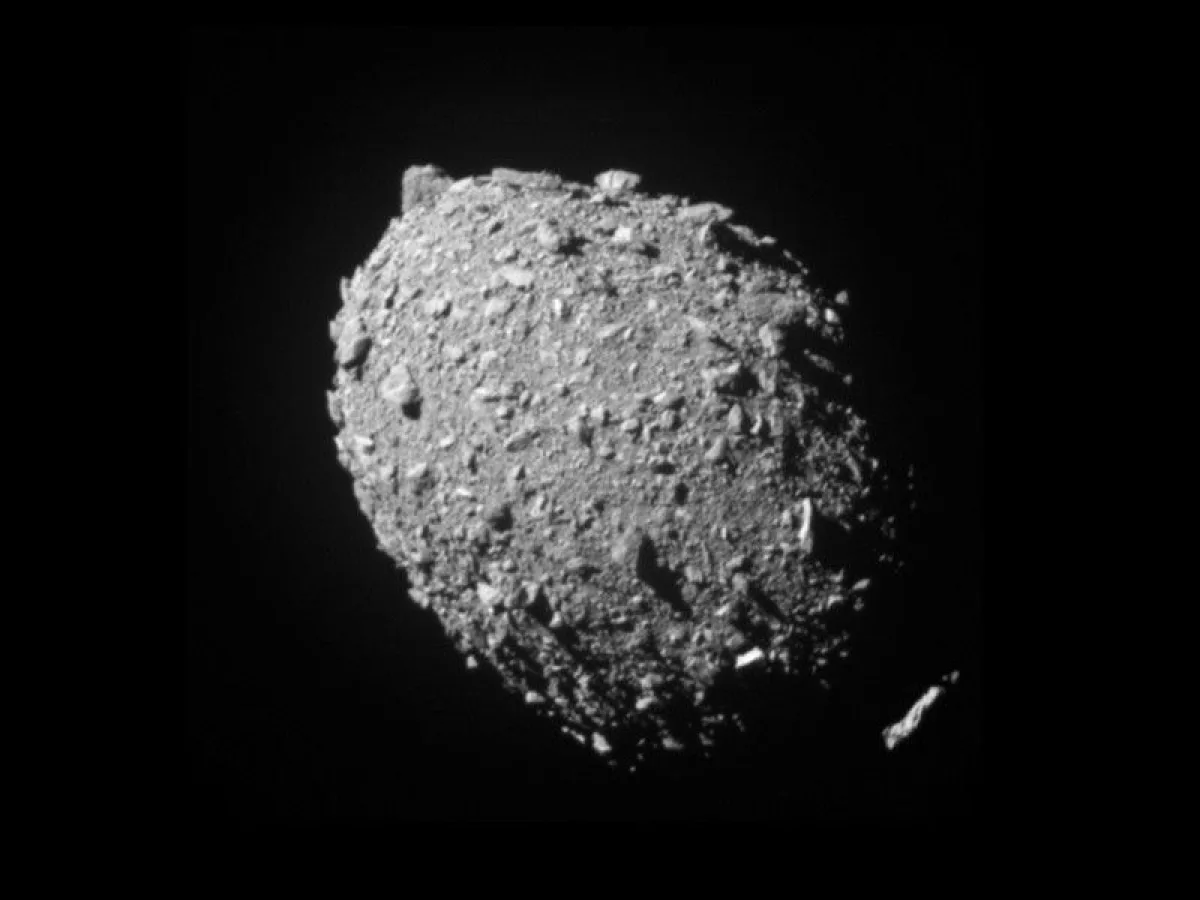
The mission focuses on the specific dimensions of the hole left behind. Hera is looking for multiple key physical features to help scientists understand the collision better - these measurements will tell us if the asteroid is a solid rock or just a loose pile of rubble held together by gravity.
Hera is searching for the following details
- The distance from one edge of the crater to the other.
- The vertical distance from the rim to the deepest point.
- The shape of the raised edges around the hole.
- The layer of debris that fell back onto the surface.
- The fresh material that the impact uncovered.
If the surface is very loose, the impact might have reshaped the whole moon instead of leaving a neat circle - these findings are essential for building better computer models. Without these direct measurements, our theories about asteroid impacts are just educated guesses.
Understanding the Push
One of the biggest mysteries is how much "push" the DART spacecraft actually gave to the asteroid. When the craft hit, a lot of material flew off into space - this escaping debris acts like a tiny rocket engine that pushes the asteroid even further. Hera is there to figure out how much of the orbital change came from the hit itself versus this escaping material.
You can think of this as a physics experiment on a giant scale. By measuring the mass and the movement of the moon, Hera tells us the efficiency of our deflection method - this information is the difference between a successful mission and a failure if a real threat ever appears. We are learning exactly how hard we need to hit an object to move it out of Earth's path.
The Secrets Under the Surface
To understand the crater, Hera must also look inside the asteroid. The spacecraft uses radar and other tools to check the internal structure of both Didymos besides Dimorphos. The density and the way minerals are arranged inside the rock change how the surface reacts to a crash.
Hera is collecting data on these specific properties
- The total mass of the moonlet.
- The arrangement of the interior layers.
- The chemical elements that make up the rocks.
Early predictions suggest the result of the impact could be much larger than first expected. Hera is the only way to resolve the theories with hard evidence. Once we know what these asteroids are made of, we can better predict how other asteroids in our neighborhood will behave.
FAQ
Why couldn't we see the crater from Earth?
Dimorphos is very small and very far away - Even our most powerful telescopes only see it as a tiny dot of light. We need a spacecraft like Hera to be right next to the asteroid to see the surface features clearly.
Is Dimorphos a danger to Earth now?
No, Dimorphos and its larger partner Didymos are not on a path to hit Earth. NASA or ESA chose them because they are perfect for testing deflection technology without creating a risk to our planet.
What happens if the asteroid is just a pile of rubble?
If the asteroid is a loose collection of rocks, the impact likely caused a global reshuffling of its surface - this tells scientists that we need to be careful when hitting "rubble pile" asteroids, as they might behave differently than solid rocks.
References
- ESA Hera Mission Official Website - https://www.heramission.space
- ESA Space Safety - Hera Mission - https://www.esa.int/Space_Safety/Hera
- Stickle, A.M. et al. (2025). "Dimorphos's Material Properties and Estimates of Crater Size from the DART Impact" - https://iopscience.iop.org/article/10.3847/PSJ/ad944d
- Michel, P. et al. (2022). "The ESA Hera Mission: Detailed Characterization of the DART Impact" - https://iopscience.iop.org/article/10.3847/PSJ/ac6f52
- NASA DART Mission Official Site - https://science.nasa.gov/mission/dart
- ESA - Glimpses of Hera's Target Asteroids Inspire New Science - https://www.esa.int/Space_Safety/Hera/Glimpses_of_Hera_s_target_asteroids_inspire_new_science
- Hera Mission Overview - ESA - https://www.esa.int/Space_Safety/Hera/Hera_mission_overview
- Nature Communications Special Issue on Didymos Studies - https://www.nature.com/ncomms/
- European Space Agency - Planetary Defense - https://www.esa.int/Space_Safety/Planetary_Defence
- AGU Fall Meeting 2024 - DART Cratering Studies - https://ui.adsabs.harvard.edu/abs/2024AGUFMNH54A..08G